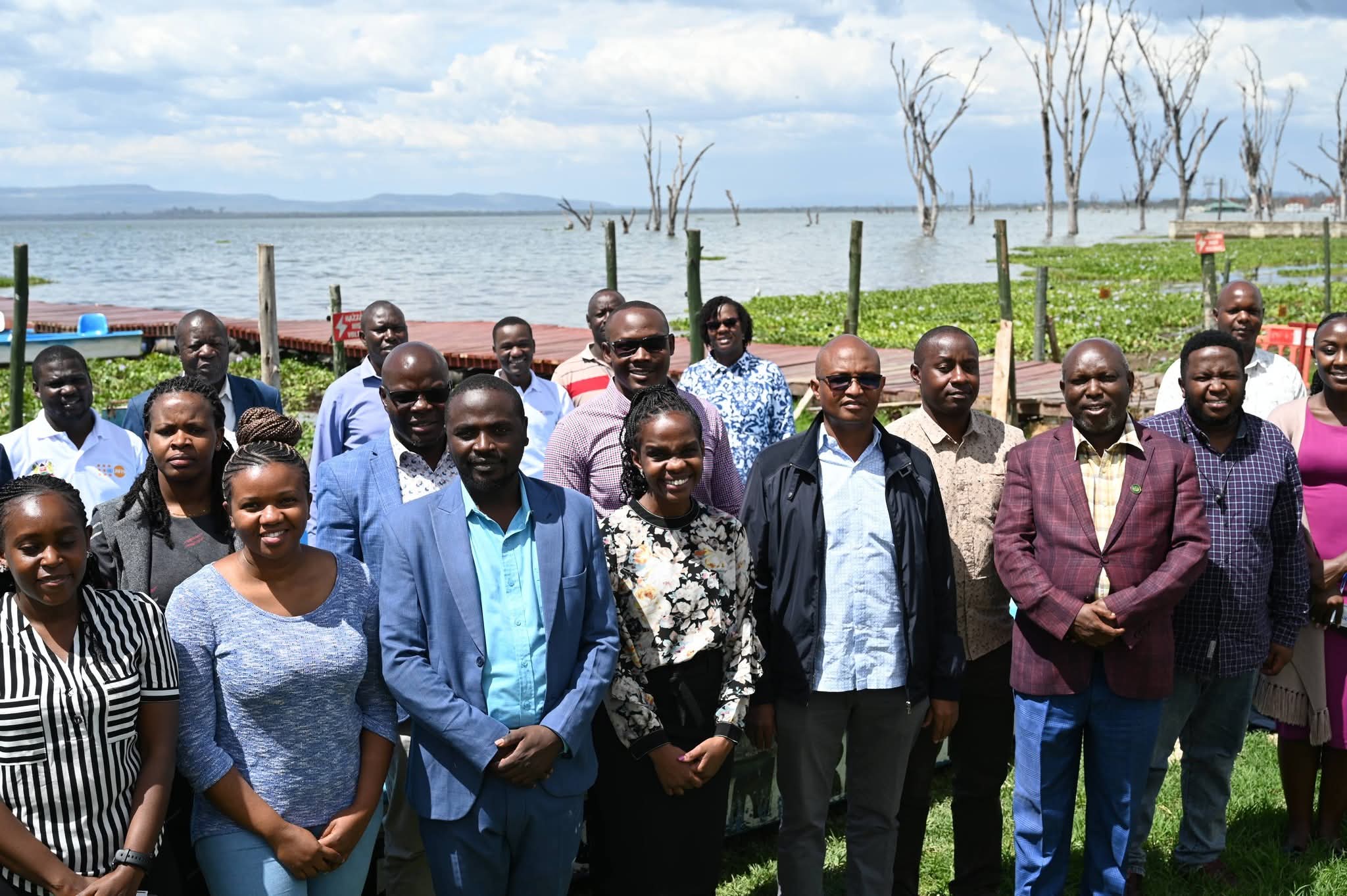
- According to the State Department for Environment and Climate Change, this rise in water levels, caused by climate change, changing weather patterns, and land use pressures, is displacing more than 75,000 households.
Kenya is taking an important step toward securing international climate finance to deal with growing losses and damages caused by climate change.
In the week starting December 14, 2025, government agencies, experts, and partners are meeting in Naivasha for a five‑day workshop to prepare the country’s first full request to the Fund for Responding to Loss and Damage (FRLD).
The Capacity Building and Preparatory Workshop, organized by the Climate Change Directorate (CCD) under the Ministry of Environment, Climate Change and Forestry, is focusing on the serious impacts of rising lake waters often called backflow affecting Rift Valley lakes and Lake Victoria.
According to the State Department for Environment and Climate Change, this rise in water levels, caused by climate change, changing weather patterns, and land use pressures, is displacing more than 75,000 households.
Roads, schools, and health facilities are being submerged, undoing years of development work.
Read More
The workshop brings together 35 experts from national and county governments, universities, civil society, and development partners. Their task is to align Kenya’s response with the newly finalized Barbados Implementation Modalities (BIM), the framework that guides access to FRLD financing.
During the opening, Director of Climate Change Dr. Pacifica Ogola, represented by Mr. Lerenten, stresses that the scale of loss and damage Kenya faces has gone beyond what adaptation can handle, meaning the country qualifies for loss and damage support.
Communities are dealing not only with financial losses but also with deep social and cultural impacts — graves and cultural sites swallowed by water, rising disease, deaths, and even conflict.
"Throughout the week, participants are discussing the science behind loss and damage, how it is governed under the United Nations Framework Convention on Climate Change (UNFCCC), and the operational requirements of the FRLD,"says the State Department of Environment and Climate Change.
They are also reviewing past studies on rising lake levels and pointing out gaps in data, especially around non‑economic losses like displacement, health impacts, and cultural heritage.
The programme features perspectives from different sectors — health, gender, education, agriculture, water, roads, and mobility — with case studies from Nakuru, Kisumu, Busia, and Turkana.
Speakers from government, universities, and international partners highlight how climate change connects to public health, gender‑based violence, and social vulnerability, stressing the need for responses that are gender‑sensitive and community‑driven.
One key outcome is the creation of standardized data collection tools. These tools will support a nationwide fact‑finding mission in January 2026.
The State Department says they will provide strong evidence of both economic and non‑economic losses, helping Kenya’s funding request meet BIM requirements of country ownership, impact, and alignment with national policies.
As Kenya’s National Focal Point to the FRLD, the CCD is leading the next steps — data collection, drafting, and internal approval of the funding request before the February 2026 deadline.
Officials describe the Naivasha workshop as the first of its kind in Kenya and a major milestone in turning climate impacts into actionable international support.
Among those present are Thomas Lerenten Lelekoitien, Michael Okumu, Samuel Muchiri, James Thonjo from the Climate Change Directorate, and Patricia Nying’uro from the MET Department.
The rise of water levels in Kenya’s Rift Valley lakes remains one of the country’s biggest climate challenges. It is causing widespread displacement, disrupting ecosystems, and damaging infrastructure.
Since around 2010, lakes such as Baringo, Bogoria, Naivasha, Elementaita, and Turkana have seen water levels rise to unprecedented levels. Some have doubled in size within a decade, swallowing villages and farmland.
There are even fears that Lake Baringo (freshwater) and Lake Bogoria (alkaline) could merge, a potential ecological disaster.
This “backflow” is already submerging roads, schools, and health facilities, forcing tens of thousands of households to leave their homes.