
A portable solar-powered milk chilling can is helping small-scale dairy farmers keep milk fresh for hours without electricity, cutting post-harvest losses and increasing earnings. By bringing the cold chain directly to the farm, this climate-smart innovation is transforming dairy production, improving rural livelihoods, and making clean energy work for farmers where reliable grid power remains unavailable.
For years, Debra Kerubo, a mother of four from Kapsita Village in Elburgon, wakes up with a routine known to her too well. That of milking her five cows that have been her source of livelihood for her and her small family.
Debra ventured into dairy farming in 2017, to date. She used to sell her milk to her neighbors at a lower price compared to that of Elburgon Progressive Dairy Cooperative where she now sells, thus impacting her family. This persisted until she discovered a NOMAD milk chilling can powered by solar energy in mid-October 2025.
The Nomad can is a novel innovation by Savanna Circuit a Kenyan agritech and clean energy company that designs and manufactures solar-powered cold chain solutions for agriculture
“This has enabled me to store milk from morning milking until evening milking, so I can deliver it all to the cooperative at once, something I couldn't do before.” Debra says.
With this Debra can now breathe a sigh of relief from the pressure and fear that the morning milk might curdle before evening. Mercy Kibugui from Savannah circuit says this innovation is a game changer in milk production.
“The Nomad can help the farmer to preserve the milk all the way from farm to the processor.” She says
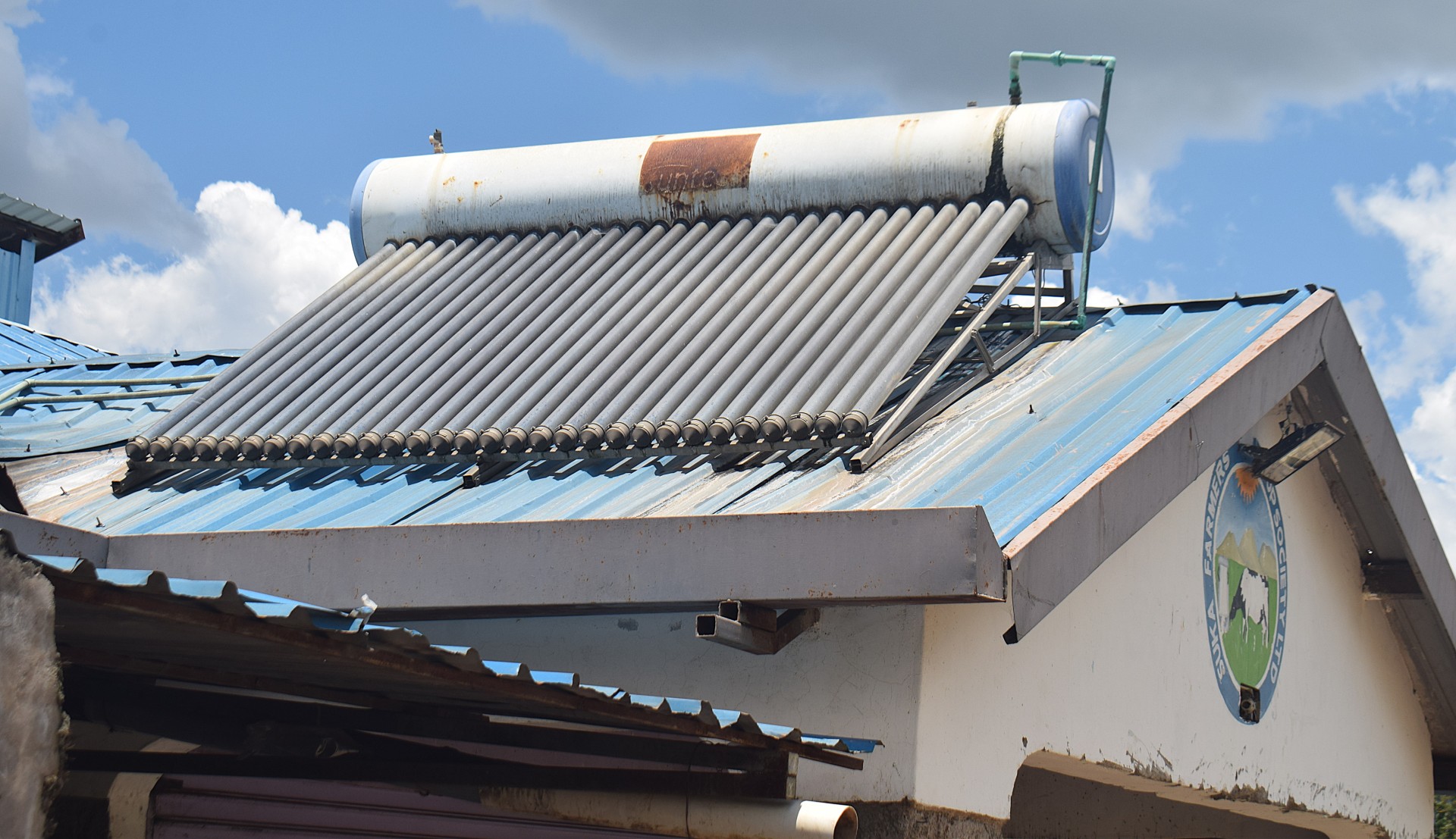
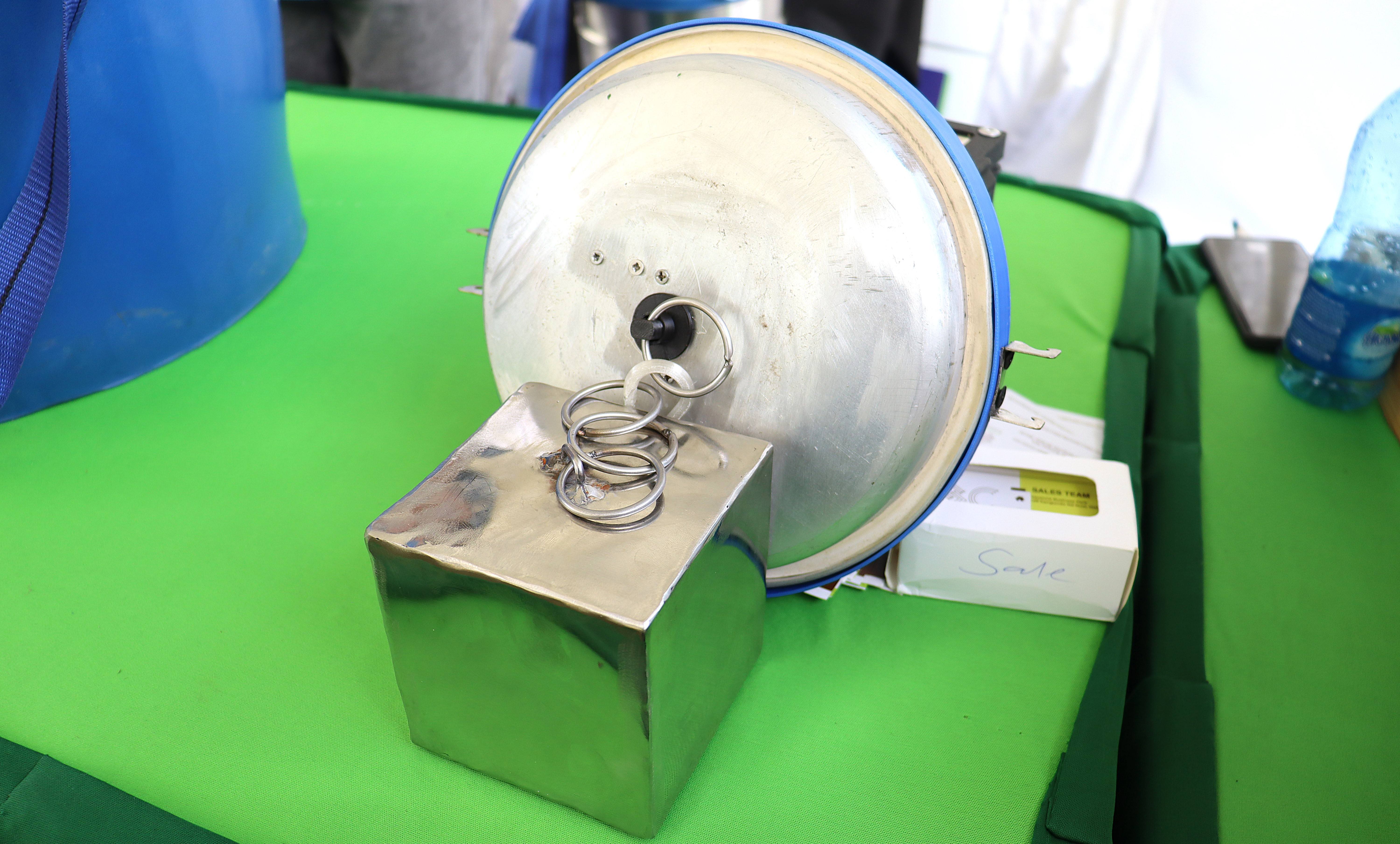
These cans come in three carrying capacities, a 10-liter, 25 liters, and a 50 liter. The 10, and 25-liter cans are flexible enough that you can milk in it directly. They have a detachable 1 kg thermocore insert that is attached to their lids, that are taken to already established cooling stations known as Ice Water dispensers(IWD) that utilize solar. At the station the thermocore insert is chilled up to around 7 to 8 degrees, that is enough to cool 7 to 9 litres of milk litres up to 8 to 12 hours.
 used to coold the thermocores at Elburgon Progressive Dairy Framers Ltd Nakuru Kenya.jpg)
The power produced by the solar panels at the station ranges between 450 to 600 watts. With each Ice Water Dispenser cooling 64 cubes at a ago, therefore serving approximately 32 farmers meaning that each farmer has two cubes ensuring that when a rider picks one, there is another one that is left cooling or already in the farm.
The organisation says this is it's smallest unit, noting that it also owns a larger one capable of carrying up to 160 thermocores at a time.
The can itself uses solar energy to spin the thermocore insert attached to it in order to agitate the milk to harmoniously cool it.
“For a 25 liter can a farmer needs 4 thermocores, one attached to the can to agitate the milk, and 3 dropped inside the can.” Mercy says
For many small-scale farmers acquiring such a technology is an uphill task considering that their income is squeezed not only by the small amount of milk sold, but also by the poor prices from the buyers. To cushion farmers from this, Savannah Circuit partners with financial institutions like Cooperative Bank which has partnered in collaboration with Shell Foundation, and milk cooperatives.
The Foundation funds Cooperative Bank, which funds the dairies and cooperative societies allowing farmers to acquire the cans. A good example is for the 10 liter can that costs Ksh 10,000 in cash, the bank is giving an interest of 10%, translating to Ksh 300 shillings per month.
“That is Ksh 10 every day for 30 days, deducted from the earnings of the milk that they take to the cooperatives and dairies.” Mercy says.
In this financing model, the individual farmer’s milk cooperative deducts the said amount directly from the milk earning and credits it to the Co-operative Bank.
For the big can that holds 15-liters, which is preferable for someone who is either a transporter or a milk collector that costs Ksh 21,000 in cash, they pay Ksh 22, translating to Ksh 650 monthly. This innovation fills a gap in the main grid power inconsistencies in the rural areas.
 2026.jpg)
Gladys Koech an agribusiness expert in Nakuru says it is with this kind of agri-innovations that are needed not only to boost farmers' morale into farming, but also make substancial profits in this heavily impacted sector by climate change.
“Farmers need more of these kinds of innovations in order to reduce post-harvest loss which is the major challenge facing them.” Gladys says.
She further points out that the financing model is also another hurdle that small scale farmers find difficult to cross, and most of the time they shy away from acquiring such significant innovation because of punitive and near impossible prices.
“What makes it even better is the fact that they can pay in installments deducted directly from the sale of their milk by the cooperative.” She says
Gladys says there is more room for investment in the agriculture sector and calls on all innovators to keenly look at the sector and spot where they can fit in as long as it is affordable and efficient to farmers. She also calls on the government through the ministry of agriculture to subsidize farmer input and costs of production of such innovation to make it cheap for farmers to acquire.
For now, farmers like Debra are thankful for the innovation that brought the NOMAD cans because were it not for it she would still be selling her milk to neighbors making losses due to poor prices and milk curdling.
The company also has introduced Sun Chop, a battery powered chaff cutter that can run for 12 hours, on a swap system, just like the EV motorbikes model, where batteries are swapped once they’re used up, with a fully charged one. This new innovation is in its initial stages of introduction to farmers and it is in the process of changing it to full solar power as requested by farmers in Meru who are already utilizing it.
“We have introduced the Sun Chop to farmers in Meru County and it is doing very well for them.” Mercy says.
To ensure safety of the user, Mercy says the chuff cutter has its blades concealed in a compartment inside and is self-feeding meaning that it pulls the fodder by itself, thus minimizing the chances of injuries.
She calls upon the cooperatives to adopt the system by installing charging stations just like for the milk chillers, so that farmers can benefit from it.
.png)
Kenya stands as fertile ground for investing in the Agri-solar system, considering that it receives an average of 5–7 kWh/m² of solar. Despite this potential, less than 5% of its agricultural land harnesses and utilizes solar energy in their daily operations. With an economy that heavily depends on agriculture for livelihood and creation of employment, this system presents a vast opportunity.
The benefits of utilizing solar energy in agriculture value chain are multifaceted, it helps in reducing greenhouse gas emission produced by diesel-powered generators, eradicate extreme poverty and hunger, reduce child mortality through malnutrition by enabling balanced diet, and promote gender equality and empowerment of women through equal and efficient farming opportunities, thus meeting the Millennium development goals (MDGs).
-1785307406.jpeg)
-1784287755.jpg)