
-1785307406.jpeg)
Along the road from Chepsir to Brooke, Kericho’s iconic tea fields reveal a quieter environmental story. Indigenous trees rise among the plantations, protecting soils, storing carbon, supporting biodiversity and sustaining water systems. The landscape offers a powerful lesson in climate resilience, showing how agriculture and conservation can coexist while strengthening livelihoods, protecting heritage and preparing communities for a changing climate.
The Landscape of Harmony
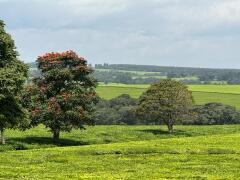
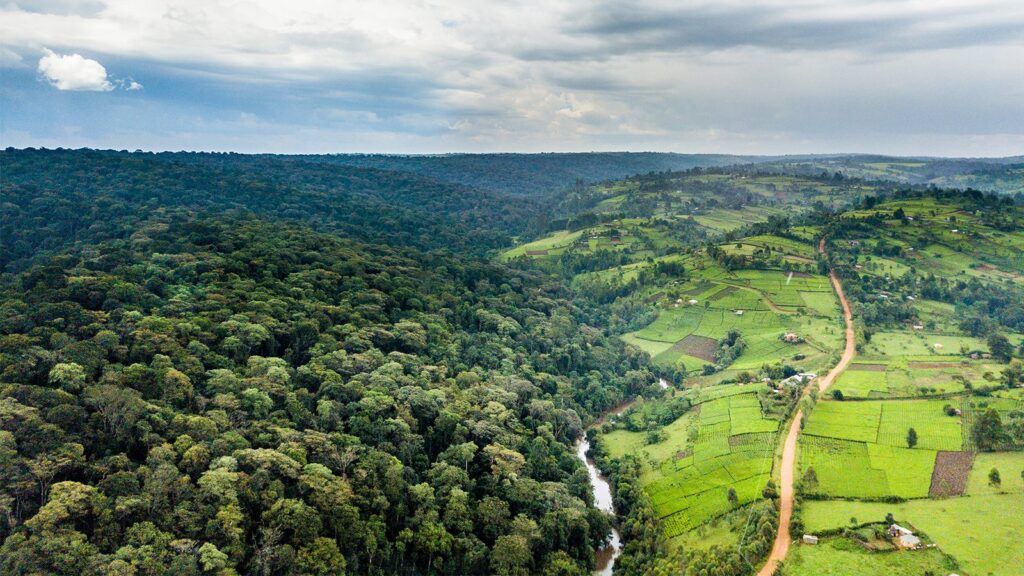
As the road stretches out of Chepsir towards Brooke in Kericho County, the landscape slowly transforms into one of Kenya's most breathtaking environmental treasures. Endless carpets of emerald-green tea stretch across the rolling hills, their neatly trimmed rows creating a mesmerizing pattern that seems to flow with the contours of the land. Yet, beyond the tea lies an even more remarkable story.
.jpeg)
Towering indigenous trees rise gracefully between the plantations, forming natural corridors that blend seamlessly with the tea fields. The contrast is striking, lush tea bushes beneath a canopy of mature trees, where nature and agriculture coexist in remarkable harmony.
This is more than a beautiful landscape. It is a living lesson in climate resilience. Unlike conventional monoculture farming, many sections of this green corridor have retained indigenous tree species that have stood for decades.
Read More
Guardians of the Ecosystem
These trees are silent guardians of the ecosystem. Their deep roots anchor the fertile highland soils against erosion, while their broad canopies regulate temperatures, reduce evaporation and help maintain moisture within the tea estates. During the dry months, the trees offer shade that cushions tea bushes from heat stress. In the rainy season, they slow down runoff, allowing rainwater to seep into the ground and recharge underground water reserves.
Together, the trees and tea create a balanced ecosystem that is increasingly becoming essential in the face of unpredictable weather patterns driven by climate change.
This approach aligns with broader efforts such as those outlined in the Kericho County Climate Change Action Plan 2023-2027 and research on combating climate change in the Kenyan tea industry.
A Living Forest
Walking through the area, one quickly notices that the forest is alive. Birdsong echoes from every direction as weavers, sunbirds, turacos and countless other species dart between the branches. Butterflies dance above flowering shrubs while insects pollinate surrounding vegetation. Small mammals quietly find shelter beneath the dense vegetation, completing a rich web of biodiversity that thrives alongside commercial agriculture.
Medicinal Value, Heritage and Carbon Storage
Many of the indigenous trees are valued not only for ecological reasons but also for their traditional medicinal properties. For generations, local communities have relied on these species to treat common ailments, preserving valuable indigenous knowledge passed down through families. Their continued protection ensures that both biodiversity and cultural heritage remain intact.
The trees also play another invisible but powerful role. They absorb carbon dioxide from the atmosphere and store it within their trunks, branches and roots, helping to reduce greenhouse gases that contribute to global warming. Every mature tree standing beside a tea field becomes part of Kenya's natural climate solution.
Community initiatives, including the Kericho school tree nursery program under the FLLoCA program, further support the planting and protection of indigenous species.
Benefits for Communities and Livelihoods
For local communities, the benefits extend beyond environmental conservation. Healthy forests protect water catchments that feed streams flowing through Kericho's tea-growing region. These waters sustain households, livestock and agricultural production throughout the year.
.jpeg)
The cooler microclimate created by the trees improves working conditions for thousands of tea pickers whose livelihoods depend on the plantations. The result is an environment where economic productivity and environmental stewardship reinforce one another instead of competing.
Lessons in Resilience
The green corridor between Chepsir and Brooke demonstrates that agriculture does not have to come at the expense of nature. Rather, the two can flourish together when deliberate efforts are made to conserve indigenous vegetation. As climate change continues to threaten food production through prolonged droughts, erratic rainfall and rising temperatures, landscapes like this offer valuable lessons.
Protecting indigenous trees within productive agricultural systems strengthens resilience while safeguarding biodiversity and supporting rural livelihoods.
Studies on climate-smart agricultural landscapes in Kericho highlight how such mosaics of tea production and natural vegetation can enhance resilience.
The beauty witnessed along this stretch of Kericho is therefore more than scenic. It is a reminder that climate resilience is not always built through massive infrastructure or expensive technology. Sometimes, it begins with preserving the trees that have always belonged to the land. For every traveler passing through this magnificent corridor, the rolling tea fields framed by towering indigenous trees leave an unforgettable impression.
But for environmentalists, farmers and future generations, they represent something even greater: a promise that people and nature can prosper together. In an era defined by climate uncertainty, the forests standing proudly among Kericho's tea plantations quietly tell a hopeful story: that conservation is not an obstacle to development but its strongest foundation.
If you have information that should be captured, notice data that has changed or is inaccurately presented or would like to collaborate with us kindly write to us at [email protected]


-1784287755.jpg)