- To secure oceans that remain productive for future generations, the summit will prioritize giving young ocean leaders and activists a seat at the decision-making table. This ensures that the future of the blue economy is shaped by those with the most to lose—and the most to gain. For Africa, OOC11 defines its maritime future.
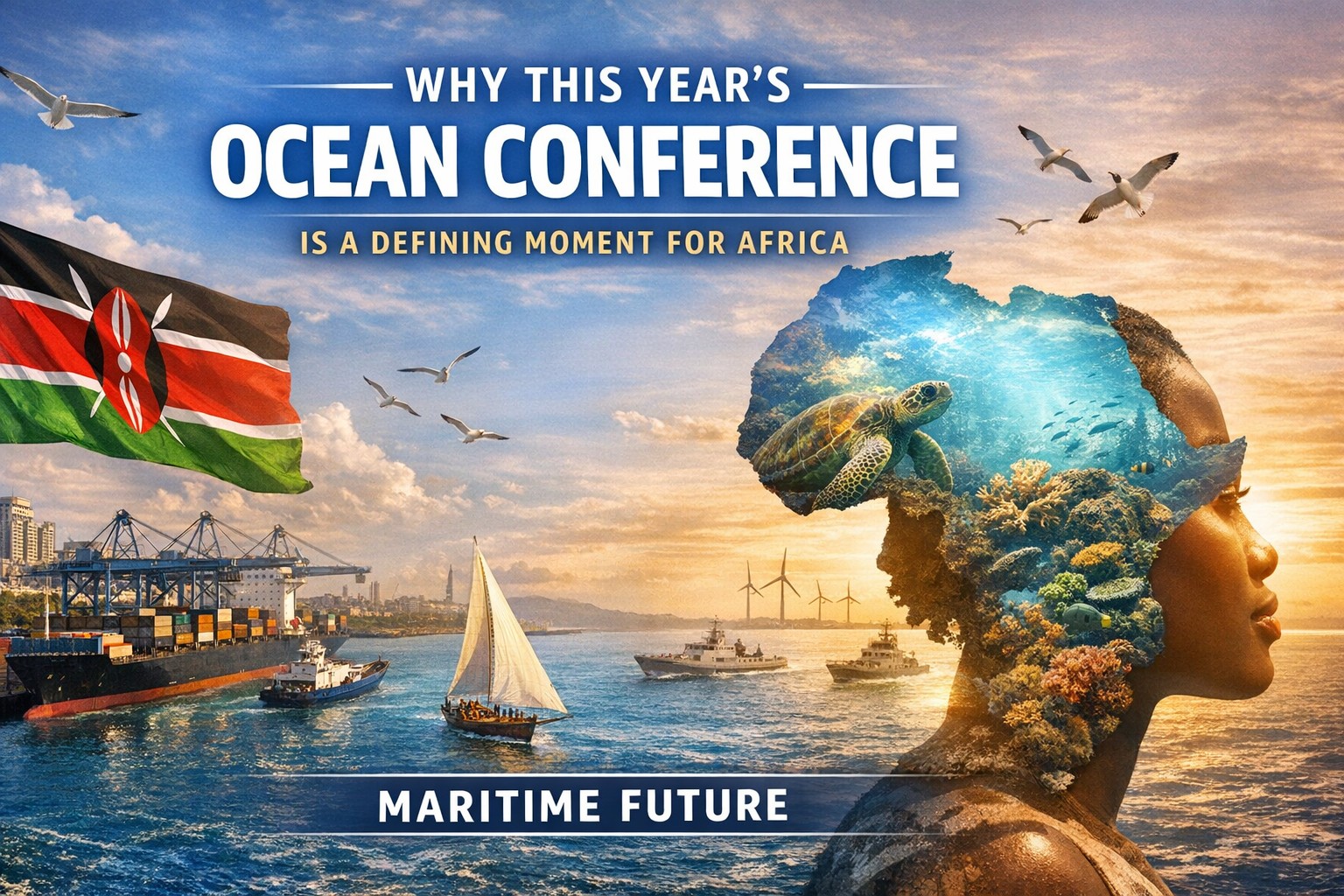
In mid-June this year, the eyes of the maritime world will turn to African shores—Mombasa, to be precise. For the first time in history, the 11th Our Ocean Conference (OOC11) will be hosted in Africa, marking a transformative shift in how we perceive and protect our most vital resource.
This is not merely a diplomatic gathering but a high-stakes mission to bridge the gap between ocean health and economic survival.
By hosting this conference, Kenya seeks to leave a permanent mark on global ocean governance. The summit will confront escalating pressures from climate change, illegal fishing, and pollution, while turning collective ambition into action.
A central focus will be the mobilization of ocean finance. Historically, marine conservation has lived in the shadow of terrestrial projects, often struggling to attract comparable levels of capital.
Kenya is determined to change this narrative by pioneering financial frameworks that channel large-scale investment into marine protection, renewable ocean energy, and sustainable infrastructure.
Read More
By reframing the ocean as a vital asset to be restored rather than a resource to be exploited, Kenya is inviting investors to become partners in long-term stability rather than short-term gain.
Security and sustainability will also take center stage. For African coastal nations, the theft of natural resources through Illegal, Unreported, and Unregulated (IUU) fishing poses an existential threat to local livelihoods.
To counter this, Kenya is championing a unified regional surveillance and enforcement network. By fostering cross-border partnerships, Kenya aims to protect the integrity of the Western Indian Ocean and ensure that its wealth benefits the communities along its coastline.
Finally, OOC11 will serve as the ultimate accountability checkpoint for global conservation targets, particularly the ambitious "30x30" goal to protect 30% of our waters by 2030. Since 2014, this conference series has recorded over 2,900 commitments worth a staggering KES 21.78 trillion (US$169 billion).
This year’s summit will introduce a strengthened architecture to track these promises, ensuring that every shilling pledged translates into tangible improvements for the oceans.
To secure oceans that remain productive for future generations, the summit will prioritize giving young ocean leaders and activists a seat at the decision-making table.
This ensures that the future of the blue economy is shaped by those with the most to lose—and the most to gain. For Africa, OOC11 defines its maritime future. It signals that African nations are no longer mere spectators in global governance, but captains of a movement that treats their waters as sacred heritage and their greatest economic frontier.
Follow us on TikTok for real-time updates, community voices, and stories that matter