
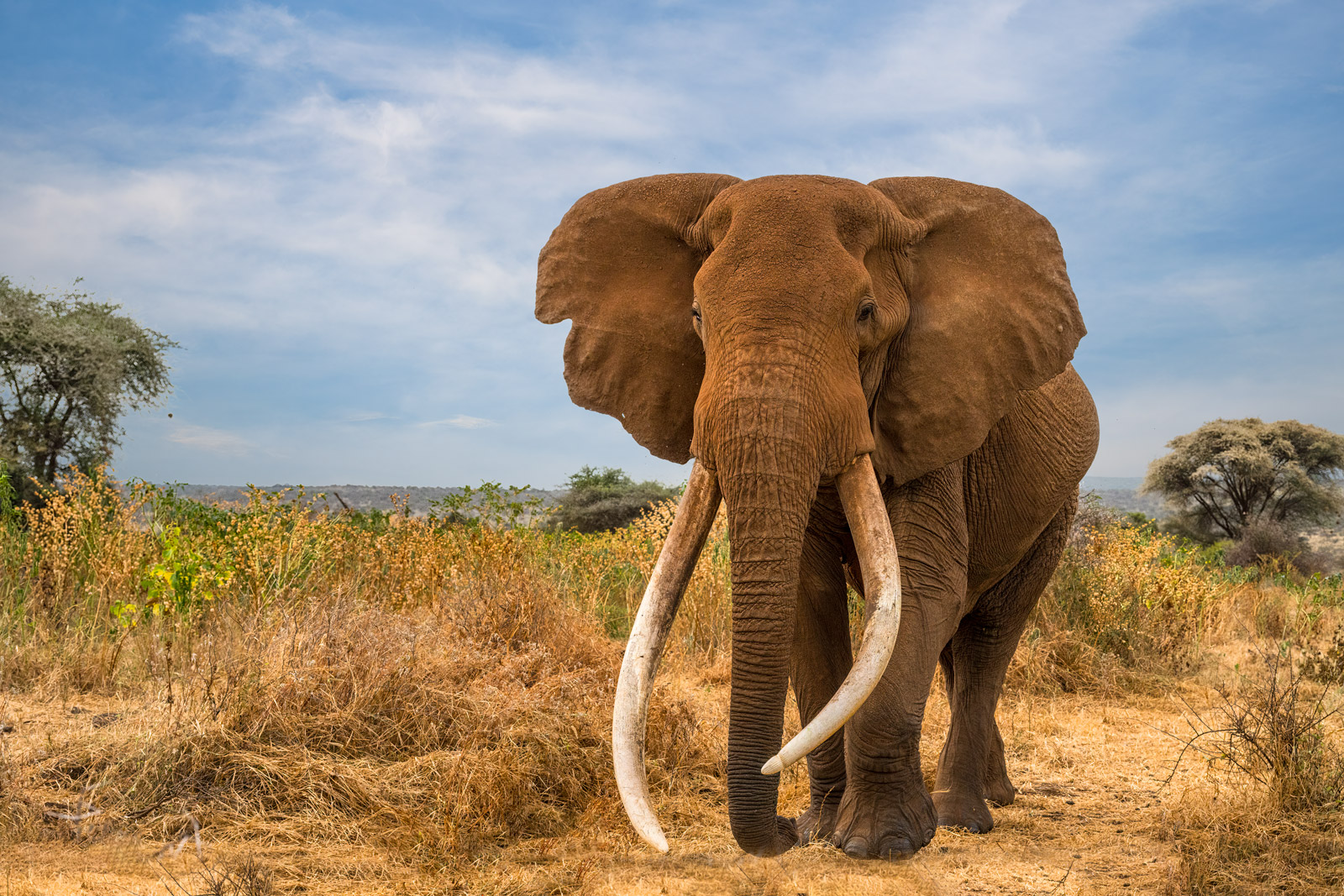
- Craig’s death has reduced the number of known tuskers in East Africa by one. Africa Geographic now estimates that there are just over 84 tuskers remaining across the continent, with Southern Africa home to about 59 and East Africa hosting 25. The loss of Craig underscores the fragility of this lineage.
January 3, 2026 was a devastating day for biodiversity. On that morning, Amboseli National Park's largest and most recognizable tusker, Craig, died at the age of 54.
According to the Kenya Wildlife Service (KWS), Craig was a legendary super tusker, famed for his immense, ground sweeping tusks and calm, dignified presence. Born in January 1972 to Cassandra, the great matriarch of the CB family, Craig lived a life that few elephants ever do — long, full, and deeply admired.
Craig was one of the last remaining super tuskers in Africa, a rare class of bull elephants whose tusks each weighed more than 45 kilograms and often scraped the ground as he walked. Fewer than a handful remain today, making him a living monument to Africa’s natural heritage.
He fathered calves that now carry forward his powerful bloodline and gentle character. Beyond his extraordinary tusks, Craig was loved for his remarkably calm nature.
KWS notes that he seemed to understand his place in the world, often pausing patiently as cameras clicked and lenses turned toward him. Widely documented and admired globally, Craig became a true ambassador of Amboseli and a symbol of what successful conservation looks like.
Read More
In 2021, Craig’s global appeal was recognized when East African Breweries Limited (EABL) adopted him through the Tusker brand. His survival to such maturity was no accident; it was the result of decades of dedicated protection by KWS, conservation partners, and local communities.
Continuous monitoring, anti poaching patrols, habitat protection, and community stewardship ensured Craig lived freely and safely, proof of what collective commitment to wildlife conservation can achieve. His final days were marked by declining health linked to advanced tooth wear, a natural challenge for aging elephants.
Craig’s death has reduced the number of known tuskers in East Africa by one. Africa Geographic now estimates that there are just over 84 tuskers remaining across the continent, with Southern Africa home to about 59 and East Africa hosting 25. The loss of Craig underscores the fragility of this lineage.
A super tusker is more than a majestic elephant; it is a rare genetic treasure, a keystone species, and a cultural symbol. These giants shape habitats by knocking down trees, digging for water, and dispersing seeds, supporting countless other species.
Their tusks carry unique genes vital for biodiversity, and their presence boosts eco tourism, funding conservation programs that protect broader ecosystems.
The rarity of super tuskers is explained by decades of poaching, their genetic uniqueness, and the slow pace of elephant reproduction. Each death is not only the loss of an individual but also of irreplaceable ecological and genetic heritage.
Craig’s passing is therefore both a moment of mourning and a call to action. He lived a full life, protected by human dedication, admired by the world, and remembered as one of the last giants whose tusks touched the earth. His legacy endures in the calves he fathered, the landscapes he shaped, and the conservation movement he inspired.
Craig’s story is a reminder of what the world stands to lose — what does his legacy mean to you? Let us know in the comments section down below.
Follow us on WhatsApp for real-time updates, community voices, and stories that matter.

-1785307406.jpeg)


-1784287755.jpg)