- Greenhouse farming simplifies tasks compared to open-field farming, eliminating challenges such as constant weeding and staking, since strings support the stems and prevent rotting.
For years, Isaiah Nabaria Misuswa and his wife Lucy Wangoi battled the unforgiving weather of Nakuru’s highlands, where cold rains and mist made tomato farming nearly impossible.
Losses were frequent, and the work was exhausting. But a shift to greenhouse farming transformed their two-acre plot in Mwigito village into a thriving source of income and stability.
Mwigito is an agricultural center located twenty-seven kilometers from Nakuru town.
Farmers in this area do not struggle to access water for irrigation. Nakuru County, being a subtropical highland region, receives rainfall occasionally, so most farmers rely on rainfed agriculture. The area experiences cold weather and heavy rainfall, conditions that are unfavorable for crops like tomatoes. This has created a significant gap in the market.
Mr. Isaiah Nabaria Misuswa, 71, and his wife Mrs. Lucy Wangoi Nabaria, 64, have been farming on their two-acre plot in Mwigito village for over ten years, drawing water from the nearby River Mwigito.
Read More
“Before I retired as a bus driver, we practiced open-field farming with my wife. We did crop rotation but mainly focused on coriander,” Nabaria recalls. Most of the farm work was done by Mrs. Nabaria while her husband worked as a driver at Egerton University.
They rotated crops such as cabbages, kale, beans, and also kept livestock. Later, they began growing tomatoes, since coriander only sold well when students were around.
He explains that they suffered heavy losses and the work was tedious. Weather conditions slowed crop maturity, frequent weeding was required, and chemicals such as fungicides were costly.
Growing tomatoes outdoors demanded a lot of staking, but the sticks often rotted during rainy seasons. With no nearby bushes to source sticks, this became a major challenge. Sometimes entire rows were broken by wind, leaving fruits on the ground to rot. Cold conditions and mist also caused flower drop, misshapen fruits, and increased the spread of diseases such as blight.
During harvest, they would lose up to six crates, costing approximately thirteen thousand five hundred shillings. “I attended a farmers’ workshop at Egerton University in 2011. I learned about greenhouse farming and its benefits. From there, I became interested since our farm was not doing well,” Mrs. Nabaria says.
After sharing the idea with her husband, they began saving money from coriander sales, which brought in about sixty thousand shillings per harvest, along with his salary. When Mr. Nabaria retired in 2013, he added his retirement benefits to their savings and purchased three greenhouses. Each measured eight by ten feet, costing a total of six hundred thousand shillings to buy and install. Unfortunately, one was lost after three years.
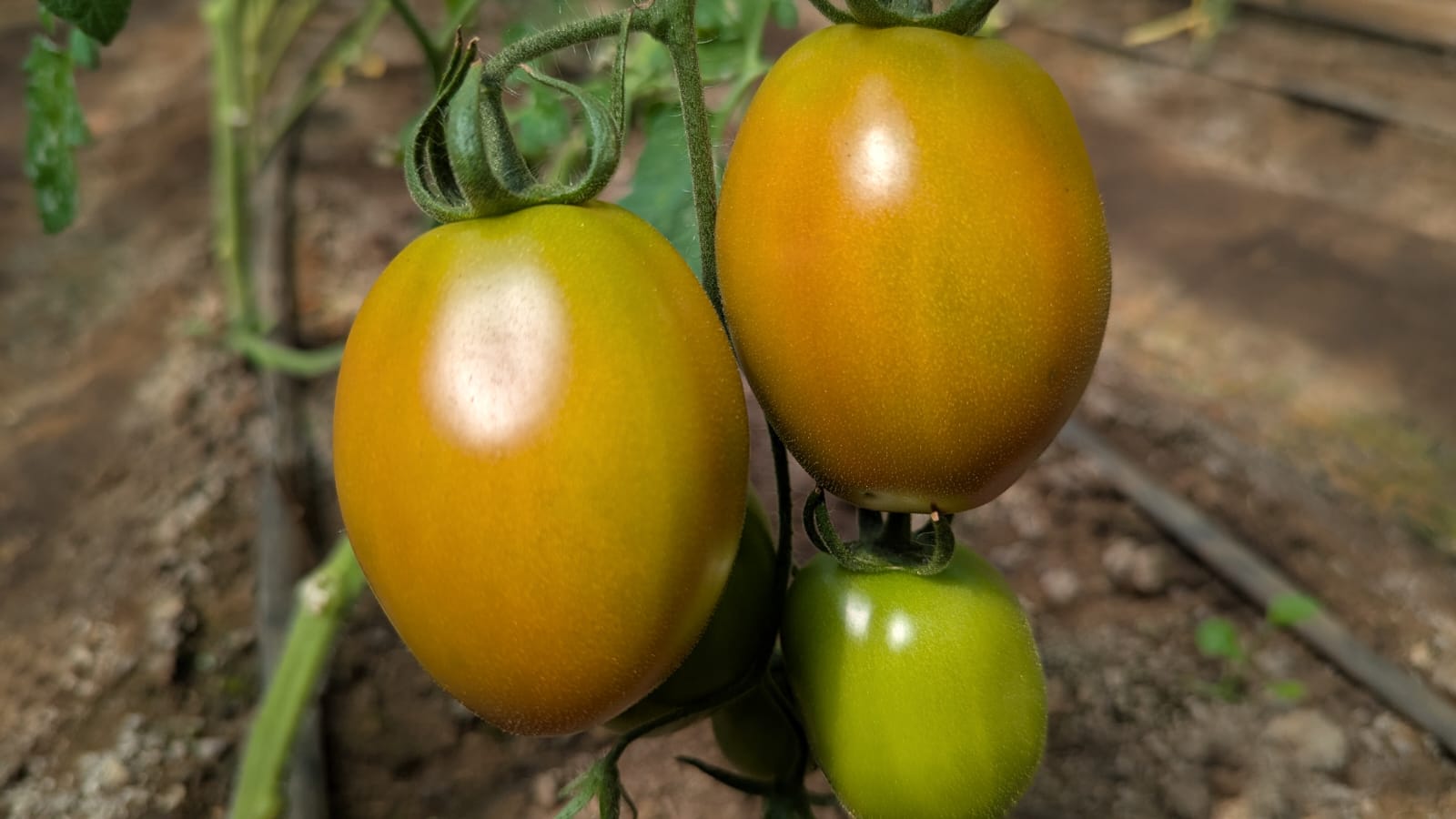
They received grafted tomato seedlings from a Chinese program at Egerton University. In the two remaining greenhouses, they planted one thousand stems each, dividing them into two portions. Nabaria notes that the plants matured in seventy-five days, unlike in the open field where they took four months. At first, he thought the investment was too costly, but his perspective changed when he earned two hundred thousand shillings from the two greenhouses.
Now, he has recovered his investment and continues to profit. “These greenhouses have really made work easier for my wife and me. Health-wise, they’ve helped us too because of the warmth inside. I can work here anytime, regardless of season or weather,” Mr. Nabaria says.
Greenhouse farming simplifies tasks compared to open-field farming, eliminating challenges such as constant weeding and staking, since strings support the stems and prevent rotting.
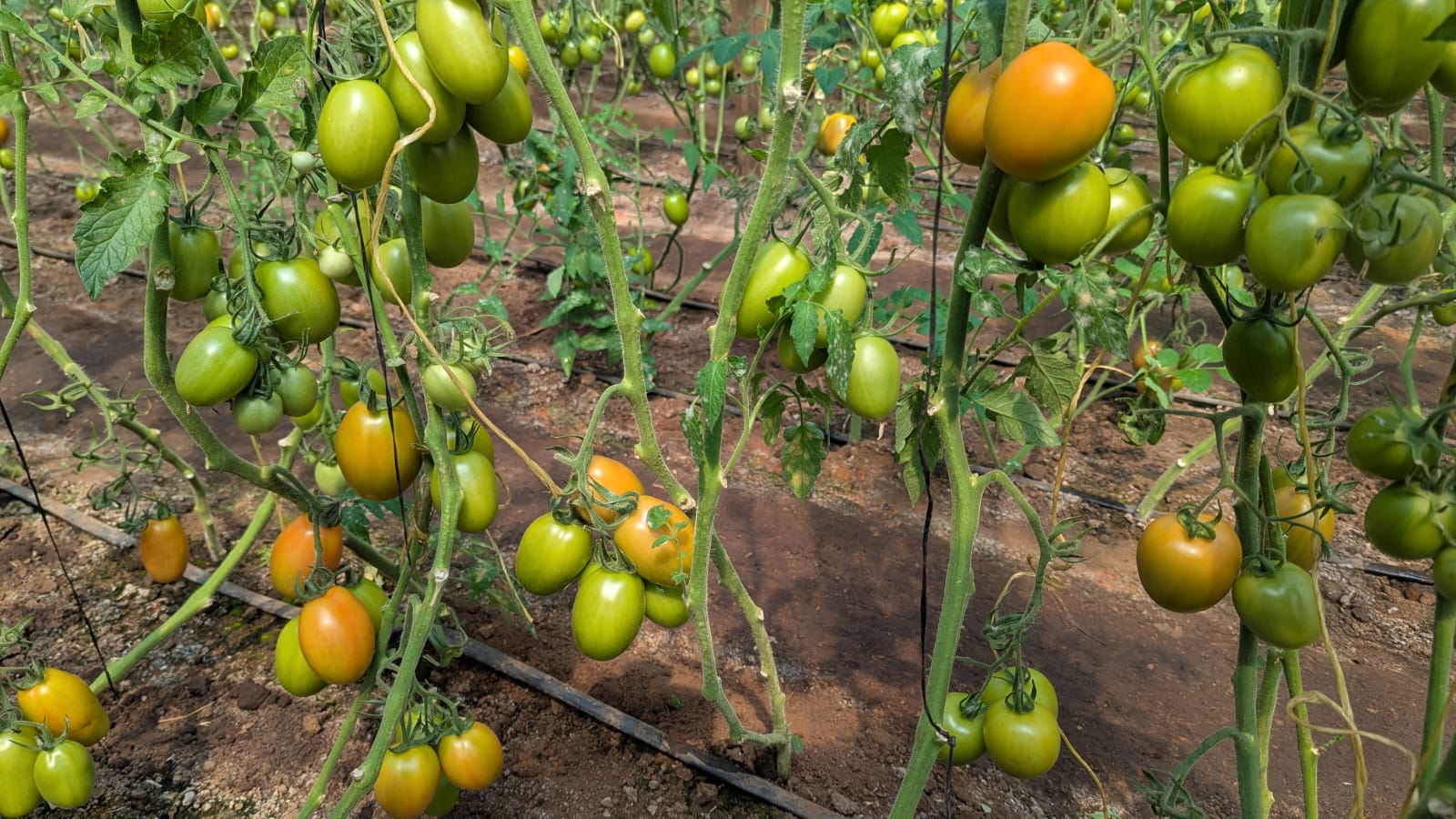
He adds that crops face fewer pest and disease attacks. The warm conditions not only accelerate plant growth but also speed up fruit ripening. For Nabaria, greenhouse farming is low-risk and cost-effective, especially since he practices organic farming, using manure from his sheep pen and chicken coop.
He harvests weekly, packaging tomatoes in crates that sell for between one thousand two hundred and fifty shillings during market fluctuations and up to two thousand five hundred shillings on good days. Through farming, he has educated all four of his children and is now supporting his grandchildren’s education.
One hundred and eighty-seven kilometers away, in the highland equatorial climate of Kisii County, the story is different. Mr. Jason, 54, from Kiumbu Ward, has practiced mixed farming for seventeen years.
He grows maize, bananas, sugarcane, tomatoes, cabbages, napier grass, and also keeps chickens and cows. He relies on rainwater and a borehole for irrigation on his one-and-a-half-acre farm. “I have subdivided the land into portions for each crop. For tomatoes, I’ve allocated a quarter acre,” he explains.
The soil is fertile, water supply is adequate, and he prepares organic manure from compost. Despite these favorable conditions, Jason says his tomatoes still perform poorly in the market. He faces numerous challenges: crops are vulnerable to pests and diseases, birds destroy fruits during ripening, and pests such as Tuta absoluta attack the plants.
Tomatoes also suffer from stress caused by extreme heat or cold during rainy seasons. Wind sometimes breaks stems, leading to fruit rot, while direct rainfall damages the crop. “The only remedy for stem breaking is staking, but it’s difficult since we lack bushes to source sticks. The nearby trees are forest species with branches too high to use,” Jason explains. "Even when sticks are found, they often break or rot, leaving stems on the ground to decay."
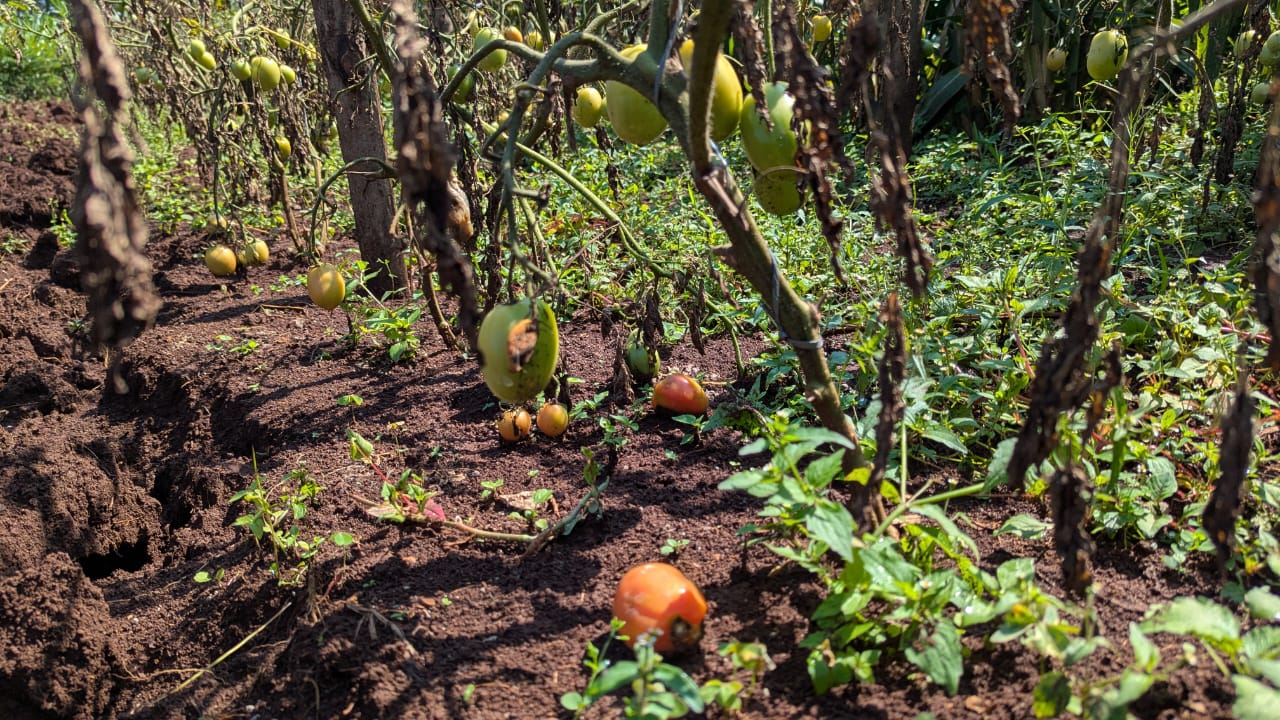
From his tomato plot, he harvests only two to three crates, taking four to five months to mature, with harvesting done twice a month. According to Kenya Greenhouse Research, greenhouses create a microclimate that supports vigorous, uniform vegetable growth by retaining warmth needed for faster development.
They offer several advantages over traditional farming: higher yields per unit area, improved product quality, and reduced pest and disease pressure. Crops suited for greenhouse farming include tomatoes, capsicum, strawberries, cucumbers, and kale. Greenhouses can also support fish farming by maintaining optimal water temperatures, reducing stress from heat and cold, and helping fish achieve desired weight more efficiently.
Follow us on WhatsApp for real-time updates, community voices, and stories that matter.
-1785307406.jpeg)


-1784287755.jpg)