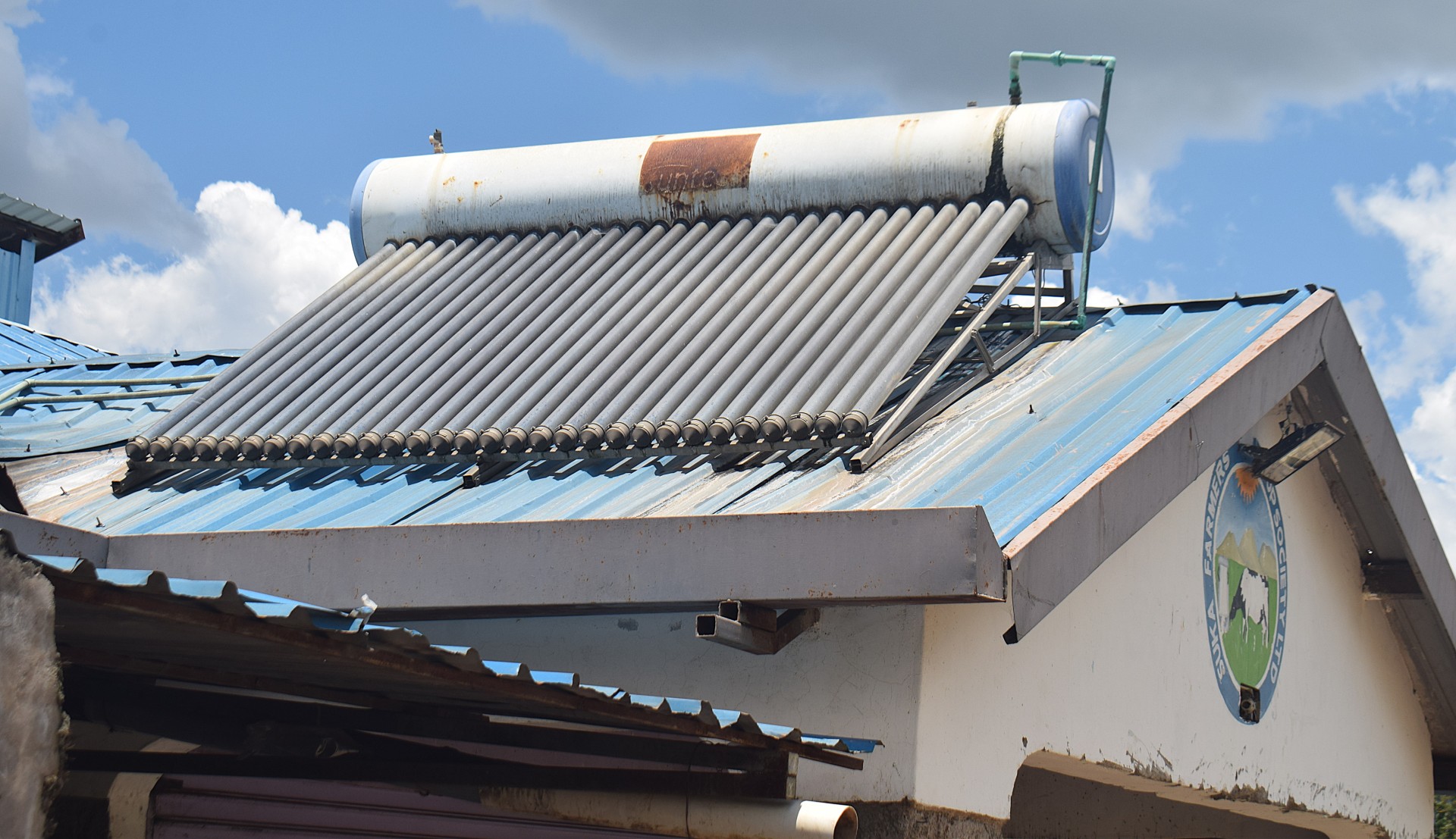
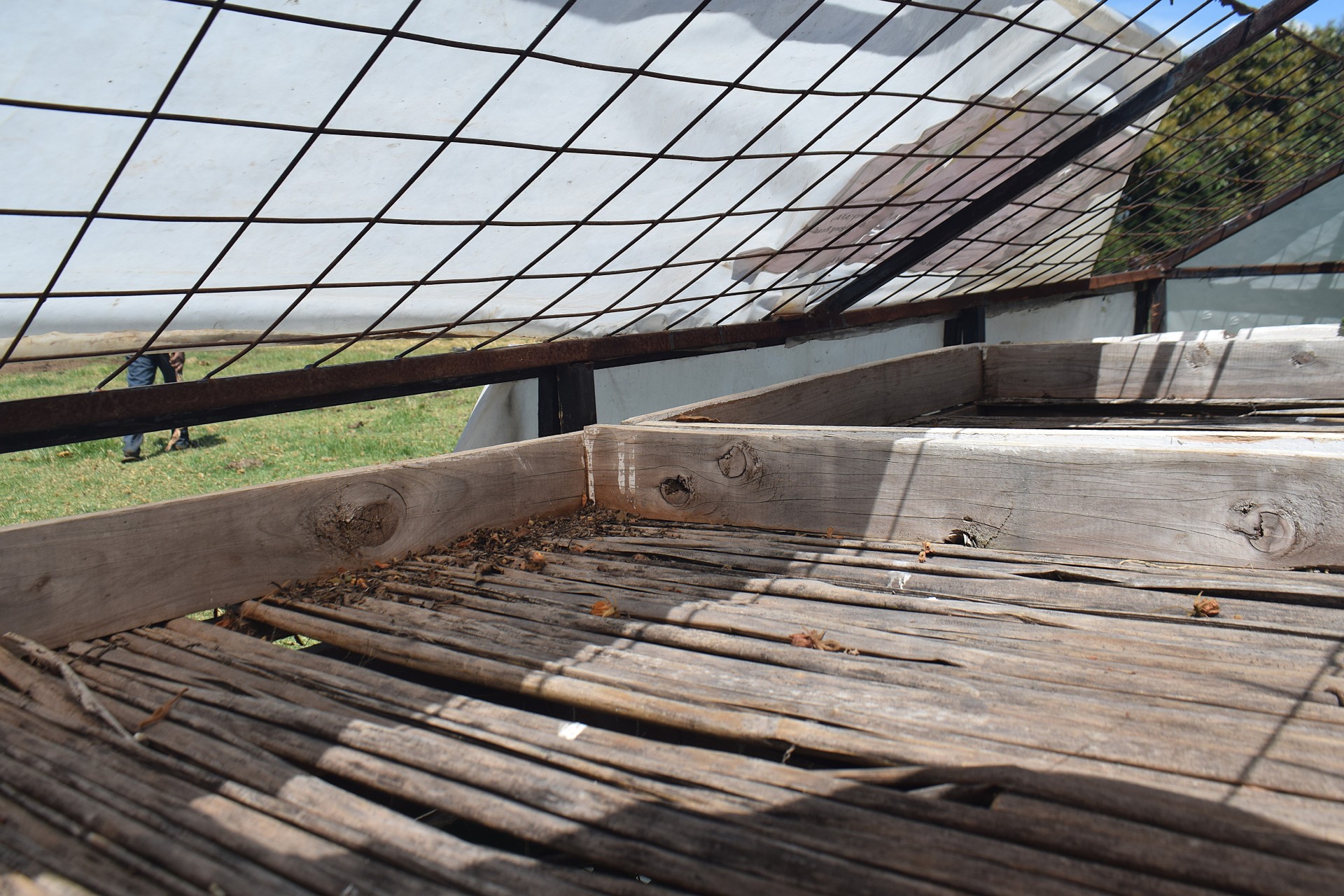
- In Kuresoi Subcounty, Nakuru County, pyrethrum farmers like John Koskei have embraced solar dryers donated by the county government to reduce post-harvest losses and improve flower quality.
It is early morning in Kuresoi Subcounty, Kiptororo Village, and farmers are already bent over in their farms, while others alight from motorcycles or walk on foot to reach the expansive, lush green fields largely covered with pyrethrum and green peas. This is a clear indication that the area is agriculturally rich.
In one of the homesteads within the village, John Koskei, a teacher by profession, sits with his family having breakfast as they chat away the morning, overlooking his farm.
For a long time, he and fellow farmers in the area depended on open-air drying of their pyrethrum flowers, a method that exposed them to fermentation, rot, and deterioration of pyrethrin—the compound that determines the price per kilo.
“We used to lay polythene papers and sacks on the ground, then spread the flowers on top to dry,” Koskei says.
That changed in 2024, when the Nakuru County government donated 18 solar dryers to several farmers’ groups in Kuresoi Subcounty. Koskei was among the beneficiaries. He shifted from open-air drying to solar drying, which proved more convenient and economical.
Read More
“It was a big challenge when I was drying openly, especially during the rainy season. Someone had to be there to cover the flowers in case it rained,” Koskei recalls.
He explains that with the dryers, once the flowers are spread inside the shelves, one can comfortably undertake other activities without worrying—even in the rainy season—because the dryer is covered with heavy polythene material and only requires occasional turning.
Previously, when drying openly, they had to either cover the flowers tightly in the evening before going to bed or take them into the house and bring them out again in the morning, which was labor-intensive. With the solar dryer, Koskei is able to focus on other activities, confident that the quality of the flowers is preserved.
Lynette Ichesa, the Acting County Director of Agriculture in Nakuru County, says the motivation to donate the dryers was to curb post-harvest losses caused by rudimentary drying methods.

“For a long time, farmers have been losing a large portion of their harvest due to rotting, reduced pyrethrin content, and fermentation, all because of the lack of modern, effective drying methods,” Lynette explains.
She adds that several farmers have been trained on post-harvest handling of flowers, how to use the dryers, their importance, and their role in reducing post-harvest losses, which in some cases reached up to 80 percent.
According to Lynette, this move by the county government also aligns with the Kenya Vision 2030 plan for developing new and renewable sources of energy. The plan promotes renewable energy, including solar, as an alternative to fossil fuels, which are harmful to both the environment and human health.
She notes that monitoring and evaluation of over two thousand farmers using solar dryers in Nakuru County indicate an improvement in pyrethrin content—from as low as 0.5 to 2.5 percent—which fetches the best prices from companies that buy the flowers.
David Nondi, a renewable energy expert in Kisumu, encourages more farmers to embrace solar energy in their farms, since the sun is readily available and accessible to the majority of farmers.
“Solar is a cheaper alternative because it is free, unlike electricity, which is too costly and eats into farmers’ profits,” Nondi says.
He further advises farmers to form village groups and pool resources to share installation costs, so that the burden does not fall on individual farmers.
“Farmer groups are very important in realizing a common dream. It becomes easier to achieve a project when efforts and resources are pooled together,” he adds.
Nondi emphasizes the need for financial institutions to develop favorable unsecured funding models, especially for small-scale farmers, to enable them advance and expand their ventures.
He says the only way to beat perennial food shortages and reduce reliance on food aid in Kenya and East Africa is to produce more—and this can only be achieved if farmers are well-equipped to produce optimally.
Mr. Joseph Kopejo, the County Director of the National Environment Management Authority (NEMA) in Nakuru County, adds that apart from cushioning farmers from post-harvest losses, the adoption of solar energy has environmental benefits for the wider community.
 Nakuru County. Photo by Daniel Kipchumba.jpg)
“Adoption of renewable energy like solar contributes to reduced emissions, which helps preserve the environment we all live in,” Kopejo says.
He notes that the recent mass movement toward solar energy is commendable, as it is easily available and accessible to most households in the country. While other forms of renewable energy require advanced and expensive technology, solar remains affordable for many.
However, this shift does not come without challenges. In a country already grappling with electronic waste, increased adoption of solar without proper education on safe disposal procedures poses a growing environmental threat.
“Solar panels come with wiring, batteries, and converters. At the end of the day, when these items malfunction or expire, disposal becomes a concern,” Kopejo explains.
He warns that such electronic waste poses environmental risks, polluting water systems and soils. When farmers unknowingly burn them, toxic elements are released into the air we breathe. He stresses the need for remedies.
“One solution is extended user responsibility, where manufacturers are required to remove expired or malfunctioning items from the environment,” he says.
Even as Koskei and his fellow farmers enjoy the benefits of solar energy in their farming ventures, challenges remain. The dryers distributed were lined with absorbent material at the base of the trays, which sometimes caused flowers to rot, especially during rainy or gloomy weather.
Another challenge they face is price fluctuation. Koskei recalls nostalgically that ten years ago, he sold his flowers at Ksh 330 (USD 2.56) per kilo of dried flowers, compared to today’s price, which can be as low as Ksh 120 (USD 0.93) per kilo.
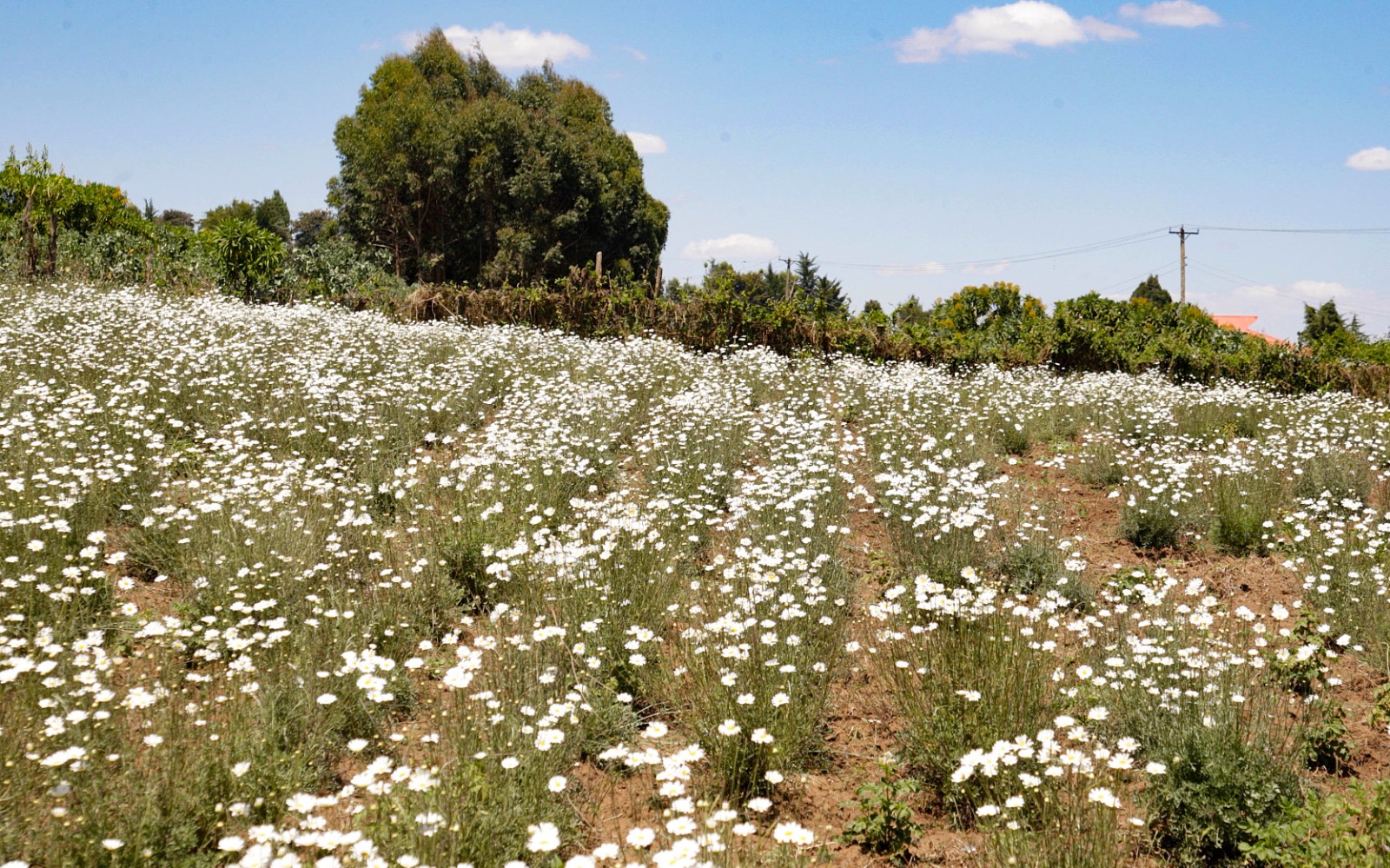
He says the current market price is unsustainable against consolidated production costs. He calls on the government, through relevant departments, to protect pyrethrum farmers from predatory companies that promise good prices but end up paying half—or sometimes fail to pay altogether.
“We have lost tons of flowers to several predatory companies that took advantage of the poor market,” he laments.
This story was produced with the support of the African Centre for Media Excellence (ACME) in partnership with the Charles Stewart Mott Foundation.
Follow us on TikTok for real-time updates, community voices, and stories that matter.
-1785307406.jpeg)



-1784287755.jpg)